
If you're considering window film for your home in the Greater Toronto Area, timing is important, but so is understanding what the installation process actually involves. Window film isn't a seasonal gimmick or a quick-fix privacy tool. When installed professionally, it becomes a permanent performance upgrade for your glass, improving comfort, energy efficiency, and even security year-round.
This guide breaks down what GTA homeowners need to know before, during, and after installing window film, with practical insights and realistic expectations.
Why Install Window Film in the First Place?
Before getting into the process, it’s worth revisiting why more Toronto homeowners are opting for film in 2025:
- Reduce solar heat in glass-heavy rooms
- Block UV rays to protect interiors
- Add privacy without closing off the room
- Reinforce windows against breakage or storm impact
- Improve insulation and indoor comfort
And unlike window replacements or retrofit glazing, film is a non-invasive upgrade with no construction, no permits, and no structural changes.
When Is the Best Time to Install Window Film?
Although professional-grade film can technically be installed year-round, spring through early fall tends to offer the most ideal conditions in the GTA. Why?
- Mild temperatures help adhesives cure more predictably
- Lower indoor condensation compared to winter months
- More daylight improves install accuracy on large glass surfaces
- Homeowners can feel immediate summer benefits, especially on south- and west-facing windows
That said, there’s no hard rule. Quality film can be installed in any season with proper care. But if you’re reading this in spring, you’re right on time to prepare your home before the heat arrives.
What to Expect During a Professional Installation
1. Consultation and Site Assessment
Before any film goes on your windows, the installer will:
- Inspect your glass type (single-pane, double-pane, tempered, etc.)
- Measure window sizes and identify any unusual shapes or frames
- Ask about your goals (heat reduction, privacy, security, UV protection)
- Recommend a film type suited to both your windows and your priorities
In areas like North York or Vaughan, older homes may have mixed glass types. Condos often use builder-grade glass that heats up quickly. A professional will tailor recommendations accordingly.
2. Surface Preparation
Clean glass is critical. The installer will:
- Remove any dust, debris, or residue from the glass surface
- Prep the window frames and surrounding area
- Lay protective material near the installation area
This ensures long-term adhesion and clarity. A rushed prep job leads to bubbling, peeling, or reduced life span.
3. Film Application
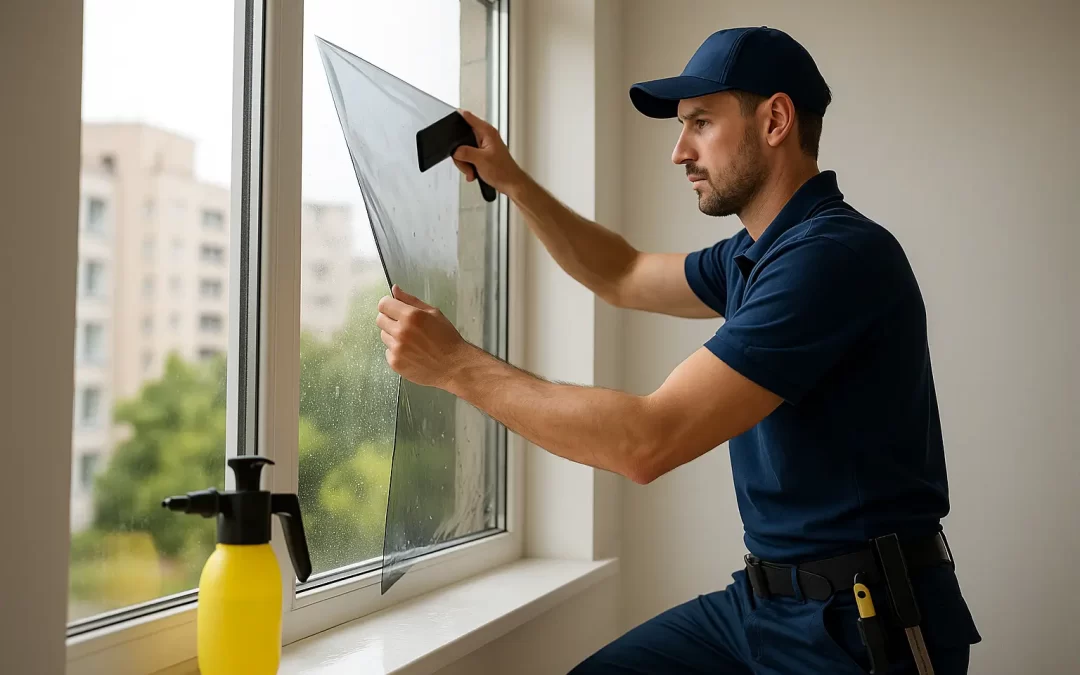
Using a water-based application solution, the film is:
- Cut to exact dimensions (including corners and curves)
- Aligned carefully with the window edge
- Smoothed out using professional-grade squeegees and tools
If you're home during installation, you’ll notice minimal mess, no strong odors, and fast progress — most homes are completed in a single day.
4. Drying and Curing Time
Although the film appears finished immediately, full curing can take several days. During this time:
- You may see a slightly hazy or streaked appearance, this is normal
- Moisture trapped between film and glass will gradually dissipate
- You should avoid cleaning the glass until the film fully bonds
Spring and fall installs tend to cure faster due to balanced temperatures and humidity.
Is Window Film Permanent?
Professionally installed film is designed to last 10 to 20 years depending on the product. It’s not meant to be removed seasonally, and it won’t peel or bubble if installed correctly on suitable glass. However, film is also fully reversible. If you renovate, move, or change your needs later, it can be removed and replaced without damage to the window itself.
Where Is Film Typically Installed in a Toronto Home?
Window film is common in:
- South- and west-facing rooms with strong sunlight
- Street-facing windows that need daytime privacy
- Sliding glass doors and large picture windows
- Home offices or dens where glare reduction helps productivity
- Bathrooms where frosted film adds privacy without blocking light
It’s also increasingly popular in older areas of Toronto and new builds in Richmond Hill or Markham where glass exposure is high but privacy is limited.
What You Should Ask Before Scheduling an Install
When hiring a film professional, ask:
- What kind of film do you recommend for my specific glass and needs?
- How long has this product been in use in the GTA climate?
- Will it affect my view, window warranty, or window structure?
- How long is the warranty?
- What happens if the film discolours, peels, or bubbles?
These questions help ensure you're not getting an overly reflective or underperforming film, especially where curb appeal matters.
Common Myths (And the Truth)
“It’ll make my windows dark.” Not true, many modern films are nearly invisible and still block heat.
“It’s just for summer.” False, high-quality films help stabilize interior temperatures year-round and prevent fading in every season.
“It won’t work in a high-rise.” Incorrect, film is widely used in condos across the GTA and improves comfort without affecting the view.
Final Thoughts: A Low-Disruption, High-Impact Upgrade
For Toronto-area homeowners, window film is one of the simplest, smartest ways to improve comfort, reduce energy costs, and enhance privacy without invasive renovations. In areas like North York or Vaughan, where glass exposure is constant, it’s especially beneficial. And if your goals include solar control, privacy, or fade protection, professional-grade options like heat control film for homes are worth considering.
Timing matters, spring and fall offer the best install conditions, but with the right installer and film, you can upgrade your home’s glass performance at any time of year.